
Michelin in the Desert
- Krista Carpenter-Beasley
- 3 days ago
- 10 min read
Updated: 3 days ago
This is the kind of story I love telling: the one where Arizona has already been doing the work, and the rest of the world finally starts paying attention. Subscribe for free to get each new issue of EatLoveTravelPlay™ first, with local loves, travel guides, food stories, cocktail culture, and a little passport energy in every drop.
How It Works, Why Arizona Belongs in the Conversation, and the Desert Stars to Watch
As seen in the January/February 2026 issue of EatLoveTravelPlay™ Magazine, expanded for the blog.
Michelin has always carried a little mystery.
Stars. Inspectors. Whisper networks. Restaurants that suddenly become impossible to book. Chefs who spend years chasing recognition, and diners who build entire trips around one meal.
But for Arizona, Michelin’s arrival feels bigger than a headline.
It feels like a hinge moment.
For years, the Southwest has been one of the quiet powerhouses of American dining, where desert terroir meets multicultural roots, where Indigenous, Mexican, ranching, frontier, immigrant, and global foodways shape dishes that feel both ancient and electric.
And yet, for a long time, Arizona has operated outside the glow of the Michelin Guide. The talent was here.The technique was here.The creativity was here.The recognition simply was not.
That is about to change.
In December 2025, the MICHELIN Guide announced its debut in the American Southwest, a new regional guide covering Arizona, Nevada, New Mexico, and Utah. Michelin says its anonymous inspectors are already in the field, with the full restaurant selection expected to be revealed during the 2026 MICHELIN Guide Southwest Ceremony.
And Arizona is more than ready.
Why Michelin’s Arrival Matters
A Michelin Guide is not just a book or a list.
It is a spotlight.
It signals to diners worldwide that a region is worth traveling for, that something magnetic, expressive, and exceptional is happening there.
For Arizona, that matters in a few important ways.
It means recognition for the chefs who have long been operating at a star level. Names locals have championed for years, chefs who have driven without fanfare, built communities, and raised the bar one plate at a time, now have a global runway.
It means validation for a cuisine shaped by land, heat, and heritage. Desert cooking is not niche. It is nuanced. It is rooted in place. It can be elegant, rustic, soulful, refined, smoky, bright, restrained, and wildly expressive.
It means a tourism and economic spark. Starred restaurants create destination diners. Destination diners create demand. Demand creates growth, from farms and suppliers to neighboring restaurants, hotels, bars, and local makers.
And maybe most importantly, it means momentum for young cooks and the next generation. When a city earns culinary recognition, doors open. Talent stays.
Apprenticeships expand. Ambition grows.
Simply put: Michelin is not elevating Arizona.
Arizona has risen, and Michelin is finally catching up.
How the Michelin Guide Works
Michelin can feel mysterious from the outside, but at its core, the Guide is built around one question:
Is this restaurant worth seeking out?
The MICHELIN Guide began as a travel companion, created to help people discover where to eat while on the road. Over time, it became one of the most influential restaurant guides in the world, with anonymous inspectors evaluating restaurants through a consistent global lens.
Michelin says its inspectors use five universal criteria: quality products, harmony of flavors, mastery of cooking techniques, the voice and personality of the chef as reflected in the cuisine, and consistency between each visit and across the menu.
For Arizona, that matters.
Because Michelin is not just looking for white tablecloths or old-world formality. It is looking for point of view, precision, identity, and food that tells the truth of where it comes from.
A star is not simply about luxury.
It is not only about caviar, tasting menus, or hushed dining rooms.
It is about whether a restaurant has a voice.
Can you taste the region?Can you feel the chef’s perspective?Is the technique strong enough to disappear into the pleasure of the dish?Does the experience stay with you after the plates are cleared?
That is why Arizona’s moment feels so overdue.
Our best restaurants have already been doing the work. The desert has always had flavor.
Michelin is simply bringing a larger audience to the table.
What Each Michelin Recognition Means
Selected Restaurant
A restaurant listed in the MICHELIN Guide, even without a star or Bib Gourmand, is still recognized as a quality dining experience. Michelin has described this level as a restaurant using quality ingredients that are well cooked, simply a good meal.
This is not a throwaway mention.
It means the inspectors found the restaurant worth recommending.
Bib Gourmand
Bib Gourmand honors restaurants that deliver good food at good value. It is not a lesser star. It is its own kind of recognition, often celebrating soulful, craveable, community-loved restaurants that diners return to again and again.
Michelin introduced the Bib Gourmand distinction in 1997 to recognize restaurants serving high-quality food at great value.
This is where Arizona could be especially exciting.
So many of our best meals happen in places that are deeply personal, wildly flavorful, and refreshingly unfussy.
One Michelin Star
One Michelin Star means high-quality cooking, worth a stop.
This is where a restaurant moves from memorable to nationally visible.
Michelin describes one-star restaurants as places using top-quality ingredients, with distinct flavors and consistently high standards.
Two Michelin Stars
Two Michelin Stars mean excellent cooking, worth a detour.
This signals a restaurant with serious craft, consistency, and a point of view strong enough to shape a trip.
Three Michelin Stars
Three Michelin Stars mean exceptional cuisine, worth a special journey.
This is the rarest level, reserved for restaurants that become destinations in themselves.
A Note on the Green Star
When the magazine article was created, the Michelin Green Star was still part of the larger Michelin conversation. As of May 2026, Michelin has announced that the Green Star is being discontinued and replaced by Mindful Voices, a broader editorial platform recognizing people in gastronomy, hospitality, and wine who are shaping more thoughtful approaches to their industries.
For Arizona, that shift still feels relevant. Because sustainability here is not decorative. It is tied to land, water, agriculture, Indigenous foodways, local sourcing, and what it means to cook responsibly in the desert.
When Michelin Looks West
Arizona’s Long-Awaited Moment on the Global Dining Stage
The Southwest has always cooked differently.
Our ingredients are not just produce. They are stories.
Hopi blue corn. Hatch chiles. Sonoran wheat. Mesquite. Prickly pear. Green garlic that tastes like desert after rain. Heritage beef. Citrus bright enough to cut through a summer afternoon.
Arizona chefs have built cuisine from this sense of place, creating kitchens that are rooted but restless, modern but memory-driven.
For decades, talent in Phoenix, Scottsdale, Tucson, Flagstaff, Sedona, and beyond has created a dining scene that holds its own against major metros. We have chefs trained in Michelin-starred temples, chefs who have staged around the world, chefs who have studied Indigenous foodways, chefs who build entire menus around farms we know by name.
The only thing missing was the organization that hands out stars.
So while we wait to see how Michelin officially views Arizona, here are the desert stars from the magazine that already tell the story.
Desert Stars to Watch
Arizona Restaurants Already Telling a Michelin-Worthy Story
This is not a prediction list. It's a love letter to the kind of Arizona dining that deserves to be seen.
Some of these restaurants feel classically star-ready.
Some feel modern, electric, and deeply personal.
Some may be more likely to land as Selected restaurants or Bib Gourmand-style favorites.
But together, they show the range of what Arizona has become.
(A quick note before we dive in: This is not a prediction list, a ranking, or me pretending to be Michelin.
These are my opinions, shaped by a few of the places I have personally experienced that made me think, these guys deserve more recognition.
I’m coming to this as a diner, writer, culinary school kid, WSET-certified wine lover, and forever curious traveler who loves seeing Arizona’s food story get the attention it deserves. But I also believe the best way to understand a restaurant is to experience it for yourself.
So go. Try them. Sit with them. Taste what they have to offer. Form your own opinions.
That is the beautiful, messy, delicious thing about food, travel, and honestly, humanity. We all experience life differently. We all bring our own memories, preferences, cultures, cravings, and wildly unique palates to the table.
My favorites may not be yours.
And that is more than okay.)

Atria
Chef Rochelle Daniel
In the high country, Atria channels mountain air, fire, and seasonality into thoughtful, hearth-driven plates.
Chef Rochelle Daniel’s cooking feels wild and restrained at once, elegant dishes that seem to mirror the forest, sky, and shifting seasons just outside the windows.
Atria matters because it expands the Arizona dining conversation beyond the desert floor.
Arizona is not one flavor.
It's also high country, red rock, pine, smoke, cold nights, and open sky.

Christopher’sat Wrigley Mansion
Chef Christopher Gross
High above the city, Christopher’s delivers a French-influenced tasting experience with a legacy behind it.
Chef Christopher Gross brings decades of craft, evolution, and refinement to the table, the kind of culinary authority that feels tailor-made for a Michelin conversation.
Christopher’s is not trying to be new for the sake of new.
It is rooted in experience, technique, and a long view of what fine dining can be.
Course
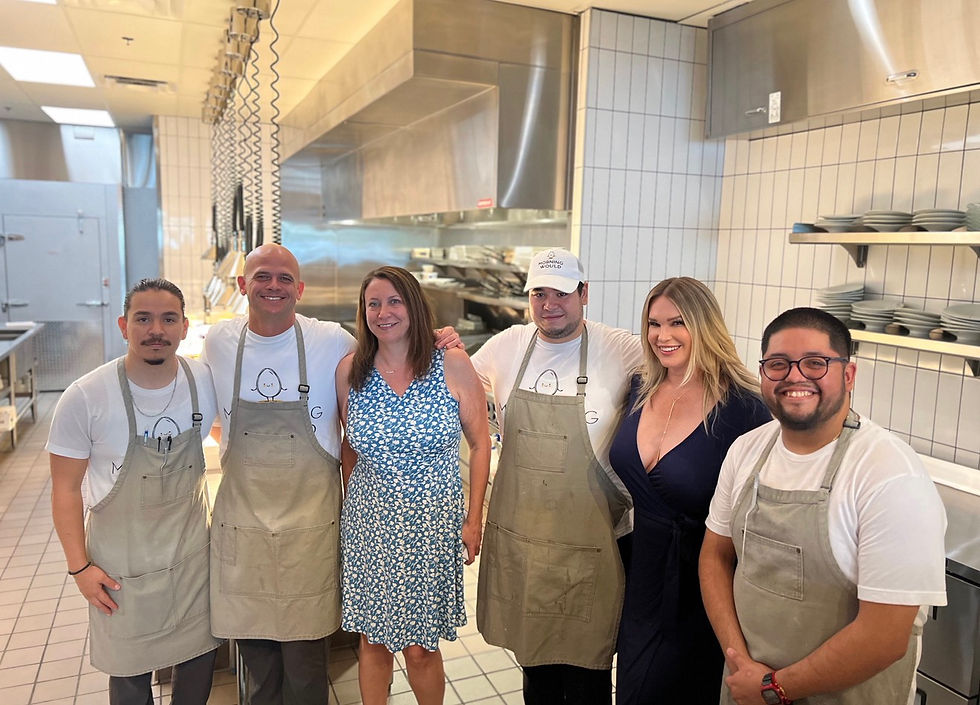
Chef Cory Oppold
Course feels intimate, modern, and quietly confident.
Chef Cory Oppold’s seasonal tasting menus blur the line between fine dining and comfort, with plates that are precise and artful but still grounded in flavor and feeling.
There is a softness to Course that makes it memorable. It is refined, but not cold. Composed, but not rigid.
This is desert modernism with a pulse.
Kai
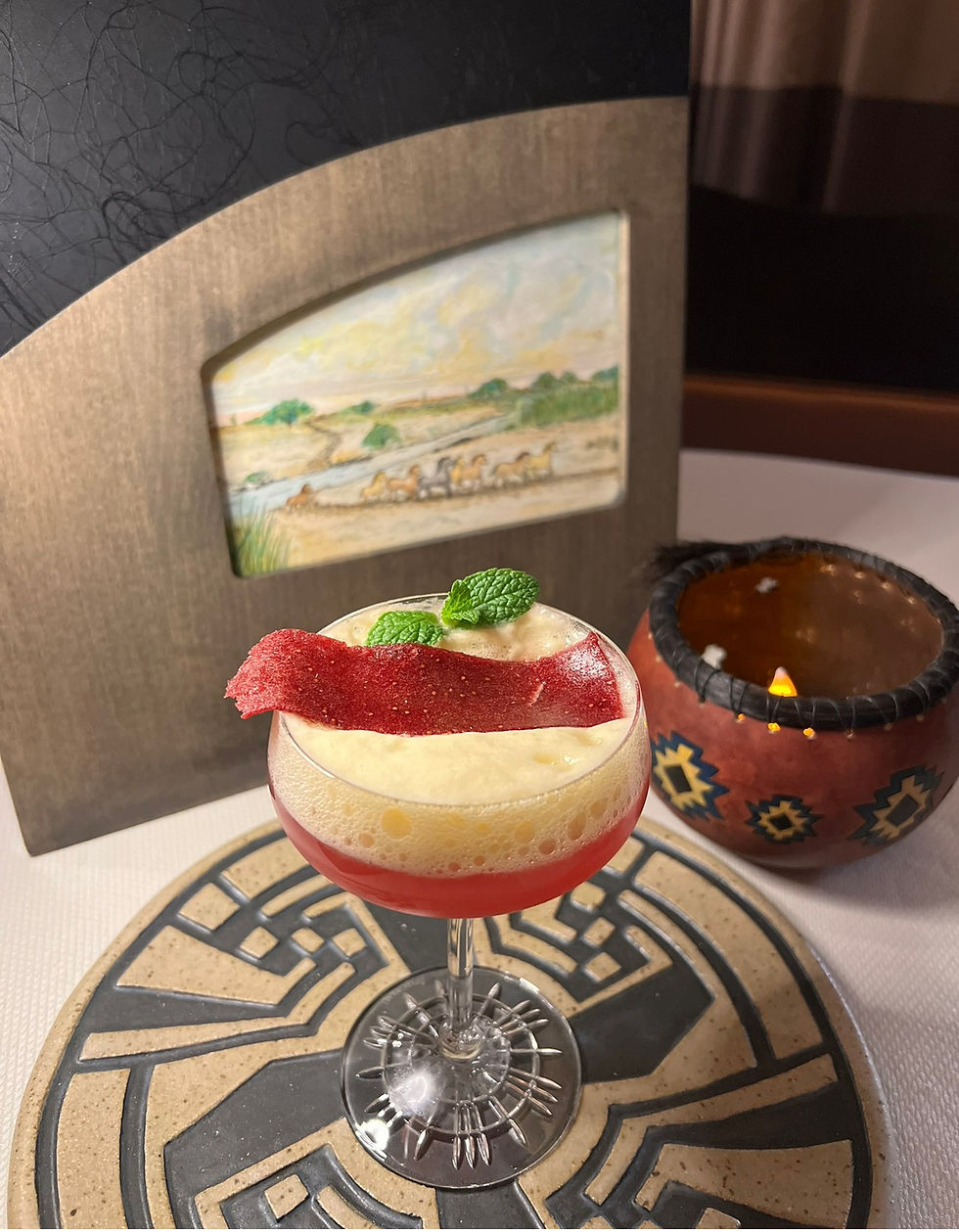
Chef Drew Anderson
At Kai, Chef Drew Anderson carries forward one of Arizona’s most meaningful fine dining experiences.
Kai is rooted in the stories of the Gila River Indian Community, where Indigenous ingredients, regional storytelling, and contemporary technique come together with quiet precision.
This is one of the clearest examples of what Arizona fine dining can be when it is deeply tied to place.
Kai is not simply fine dining in Arizona.
It is fine dining of Arizona.

Chilte
Chef Lawrence “LT” Smith
Chilte is where modern Mexican cooking gets bold.
Chef Lawrence “LT” Smith brings street-inspired flavors into a space of global technique, playful plating, and fearless expression. The result is food that feels young, expressive, restless, and completely alive.
This is the kind of restaurant that pushes Arizona’s dining conversation forward.
Not by behaving like old-school fine dining, but by showing what modern Arizona can taste like when heritage, creativity, and edge all land on the same plate.

Café Monarch & The Reserve
Chef Ben Wald
Scottsdale’s crown jewels of occasion dining, Café Monarch and The Reserve bring a level of polish, precision, and hospitality that feels undeniably star-ready.
Under Chef Ben Wald, Café Monarch leans into fine European elegance and impeccable service, while The Reserve offers a more intimate, chef-driven tasting counter experience.
Together, they showcase the kind of refinement Michelin diners recognize instantly.
This is Arizona dressed for the evening.

Anhelo
Chef Ivan Jacobo
Anhelo’s Scottsdale location feels like a return to classic fine dining, quietly refined, intimate, and transportive.
There is a familiarity in the room that seasoned diners will recognize, an experience that subtly echoes the grace and precision of restaurants like The French Laundry without feeling like imitation.
Chef Ivan Jacobo’s cooking is elegant and composed, built on technique, restraint, and confidence.
Anhelo reminds us that classic fine dining still has a place in Arizona’s future.

Bacanora
Chef Rene Andrade
On Grand Avenue, Bacanora is pure Sonoran soul.
This is mesquite smoke, bold chiles, fire, memory, and deeply personal cooking. Chef Rene Andrade’s food feels loud in the best way, layered with flavor and rooted in the kind of regional identity that Michelin should understand when it comes to Arizona.
Bacanora does not feel like it was built to chase a guide.
It feels like it was built to tell the truth.
And that is exactly why it belongs in the conversation.

Pretty Penny
Chef Steven “Chops” Smith
On Roosevelt Row, Pretty Penny feels like the kind of restaurant Michelin should be paying attention to: intimate, confident, and quietly electric.
“Chops” brings a playful but deeply considered approach to the kitchen, where globally inspired plates lean into texture, fermentation, seafood, and unexpected flavor turns.
This is not old-school fine dining, and that is exactly the point.
Pretty Penny feels like modern Arizona dining in motion: personal, stylish, flavor-driven, and alive with the kind of restless creativity that makes a meal memorable.
It is also the kind of restaurant that reminds you hospitality matters. Not stiff hospitality. Real hospitality. The kind that makes a room feel like it has a heartbeat.
What Michelin Should Understand About Arizona
Arizona is not trying to become Los Angeles.
It is not trying to become New York, Chicago, San Francisco, or Napa.
Our food culture is shaped by heat, land, migration, agriculture, Indigenous history, Mexican influence, ranching traditions, resort polish, neighborhood grit, cocktail creativity, and chefs who know how to build something distinctive without waiting for permission.
This is a place where a luxury meal can come with a sunset over the mountains.
Where a strip mall can hide one of the best bites of your month.
Where a chef can pull from memory, migration, heritage, humor, and fire in the same dish.
Where wine, spirits, and cocktails are becoming part of the larger culinary identity, not just something poured alongside it.
Where hospitality still matters.
Not the stiff kind. The real kind.
The kind that makes you feel like the restaurant is happy you came.
That is what I hope Michelin sees.
Not just the technique.Not just the plating.Not just the rooms that already look like they belong in a guide.
I hope they see the pulse.
The ELTP Take

Michelin coming to the Southwest feels like a door opening.
But Arizona was never waiting outside that door empty-handed.
We have been building this food scene one chef, one bar program, one farmers market relationship, one desert ingredient, one unforgettable dinner at a time.
Michelin may bring the spotlight, but the story was already here.
At Kai, that story is seed, land, culture, and elegance.
At Bacanora, it is Sonoran soul and fire.
At Café Monarch and The Reserve, it is polish and precision.
At Atria, it is mountain air and seasonality.
At Chilte, it is modern Mexican food with fearless momentum.
At Course, it is desert modernism with feeling.
At Christopher’s, it is legacy and refinement.
At Anhelo, it is classic fine dining reimagined for Arizona.
At Pretty Penny, it is personality, creativity, and the kind of hospitality that makes a restaurant feel alive.
Across Arizona, it is a dining scene that has grown past the point of asking whether it deserves attention.
It does.
And now, maybe, the rest of the world is finally ready to pull up a chair.
Some suggestions to learn more about Michelin and Michelin Style Dining:
Read the Issue + Subscribe
This story first appeared in the January/February 2026 issue of EatLoveTravelPlay™ Magazine, where we explored Arizona’s long-awaited moment on the global dining stage and the local restaurants already shaping the conversation.
Subscribe for free to get each new issue first, filled with local dining finds, travel inspiration, cocktail culture, fragrance stories, and the people and places making life more delicious.


Comments